
The Chromosomal Instability Lab
Meet the Team

Dr Nadeem Shaikh
Staff Scientist
Cancer Research UK

Dr Sarah Johnson
Postdoctoral Researcher
Cancer Research UK

Dr Molly Guscott
Postdoctoral Researcher
Cancer Research UK
My projects include: Investigating how specific mechanisms of chromosomal instability lead to recurrent signature Copy Number Alterations in the genome; how radiation generates DNA damage which is repaired and then leads to specific CNA patterns in breast cancer and whether that is related to radiotherapy resistance; and the role of Cylin E overexpression in CIN in high grade serous ovarian cancer
The role of ZFP64 in centromere function and chromosomal instability in cancer In my previous project, we addressed the lack of model systems for exploring the impact of specific chromosomal alterations on cell biology by developing a method to induce such alterations in cells. Now in my current project I am investigating drivers of chromosomal instability. Although we understand several processes that become dysfunctional in cancer and fuel instability, many of the specific molecular drivers that underlie this remain unclear. My project focuses on the potential contribution of one such gene; ZFP64. We have found ZFP64 to be frequently overexpressed in chromosomally-unstable cancers. Through our investigation of ZFP64 function, we have uncovered fundamental roles for ZFP64 in maintaining accurate chromosome segregation and at the centromere. Our work on this project is now focussed on unravelling how ZFP64 activity is regulating centromere function, and whether it could promote centromere dysfunction in colorectal cancer.
My research is about understanding how chromosome instability impacts ongoing genomic evolution, including differences dependent on the mechanisms of CIN, as well as how these impact the response to therapy. I use High Grade Serous Ovarian Cancer, a cancer that has a extremely high occurrence of chemotherapy resistance and is a highly chromosomally unstable cancer type, as a model to investigate these questions. This includes using in vitro cell biology, syngeneic in vivo models and computational methods to interrogate genomic changes in different CIN environments.

Dr James Scarth
Postdoctoral Researcher
BBSRC
Tracking genomic instability from HPV infection to cancer initiation My project focusses on understanding the contribution of oncogene-induced replication stress (Oi-RS) to chromosomal instability (CIN) during cervical cancer initiation. Oncogenic HPV infection is known to induce replication stress and genomic instability in the host cell, but a mechanistic understanding of how this contributes to carcinogenesis is currently lacking. Working with collaborators at the University of Birmingham and the University of Cambridge, I am using primary human keratinocyte-based models of HPV infection and disease to address this question. We are using a combination of in vitro cell biology assays, long read sequencing and single cell sequencing to reveal the interplay between Oi-RS, mitotic dysfunction and genomic instability during the progression from initial HPV infection to cervical cancer.

Dr Amy Hall
Postdoctoral Researcher
The Mark Foundation
Evaluating the impact of chromosomal instability on cGAS-STING signaling My PhD project focuses on how ongoing chromosomal instability (CIN) may impact an important innate immune activating pathway called cGAS-STING. Normally, this pathway is activated by pathogens with a double-stranded DNA genome. However, we know that ongoing CIN may also activate this pathway via the production of micronuclei. Given this, we are interested in understanding how high levels of ongoing CIN may impact the functionality of this pathway. The primary role of cGAS-STING activation is to promote an immune response against an infected cell. Therefore, we are also interested in understanding the impact that high CIN may have on the wider tumour immune microenvironment, and how this may impact response to therapies. Specifically, we are working with models of high grade serous ovarian cancer, as this cancer type is characterised by extensive CIN.

Research Technician
Barts Charity
Izzy Nichols
Managing and operating the Single Cell Suite at Barts Cancer Institute The Single Cell Suite hosts highly specialised devices that facilitate single cell seeding for downstream applications including cell line development and multiple omics approaches. The CellenONE can interrogate and isolate cells according to specific parameters, including fluorescently tagged markers, with integrated image processing that incorporates additional layers of analysis. Primarily focussed on single cell genomics, we have generated copy number profiles from a range of cancer cell lines, either from whole cell or isolated nuclei, and stem cells. The instrument is also pre-programmed for label-free proteomics experiments. The CellCelector is another fully automated cell imaging and picking system, with functionality to identify and isolate organoids in addition to single cells for similar applications. Please contact me if you are interested in collaborating on single cell cloning or -omics

Joana Andrade
PhD Student
LIDo-DTP iCASE
Uncovering mechanisms converting replication stress to CNAs and CIN Replication Stress (RS) is extremely common among cancer cells but not nearly as prevalent in normal cells, therefore representing an interesting target for cancer treatment. Cancer cells have evolved mechanisms for tolerating and bypassing RS which are poorly understood and may be associated with the chromosomal instability (CIN) also frequently observed in cancer. The McClelland lab has previously uncovered that different types of RS generate different patterns of genomic alterations, hinting at the possibility that more than one mechanism may be behind this connection. My project uses CRISPR to manipulate the pathways involved in the RS response and apply single cell shallow whole genome sequencing to explore their potential role in genome maintenance.

Jovanna Maharaj
PhD Student
MRC DTP-iCASE
Understanding the role of micronuclei in ongoing CIN in cancer, and their potential as a biomarker When either whole chromosomes or chromosome fragments fail to separate properly during mitosis, they form distinct bodies separate from the main nucleus of the daughter cells, called micronuclei (MN). While MN are a clear marker of CIN, they also have their own effects and can lead to further changes to the genome through dysfunctional DNA replication, accumulation of DNA damage, and even catastrophic events like chromosome shattering. They can even trigger an immune response which further modulates the disease. In this project, we aim to understand how micronuclei contribute to chromosomal instability in a disease context. To do so, we will characterize their behaviour in both cell lines and tumor samples, and will attempt to purify them to better understand their contents and function.

Annie Gallagher
PhD Student
LIDo-DTP
Investigating the role of chromosomal instability on chemotherapy resistance development in colorectal cancer. Chromosomal instability (CIN), the increased rate of alterations of whole or parts of chromosomes over consecutive cell divisions, can cause rapid, large-scale genomic changes in cells. CIN is frequently present in cancers such as colorectal cancer (CRC), with the continual genomic evolution and heterogeneity it provides thought to help cancer cells adapt to selection pressures and develop resistance to treatments such as chemotherapy. My project therefore investigates the role of ongoing CIN and consequential genomic evolution in the development of resistance to fluorouracil (5’FU), a major chemotherapy used in CRC. This involves using fluorescence microscopy for the study of ongoing CIN and single cell whole genome sequencing to measure genomic changes in CRC cells with and without chemotherapy resistance.
Dr Marija Maric
Staff Scientist
Cancer Research UK
Examining the role of chromosomal instability in shaping patterns of Copy Number Alterations.

Joe Worrall
PhD Student
Barts Charity

Dr Naoka Tamura
Postdoctoral Researcher
Wellbeing of Women

Daniel Muliatidan
Res Assistant (Bioinformatics)
Wellbeing of Women
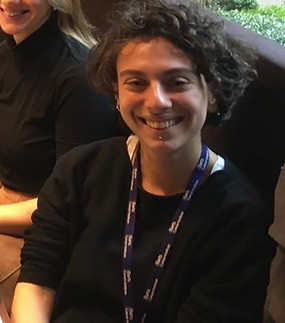
Dr Alice Mazzagatti
Postdoctoral Researcher
PCRF/Kay Kendall

PhD Student
Norah Reed Foundation
Laura Tovini

Dr Tanya Soliman
Postdoctoral Researcher
Wellbeing of Women

Alexander Andersen
Research Tech/Bioinformatics
Bowel Research UK

Simone de Angelis
Res Assistant (Bioinformatics)
Astra Zeneca
